31 Oct 2025
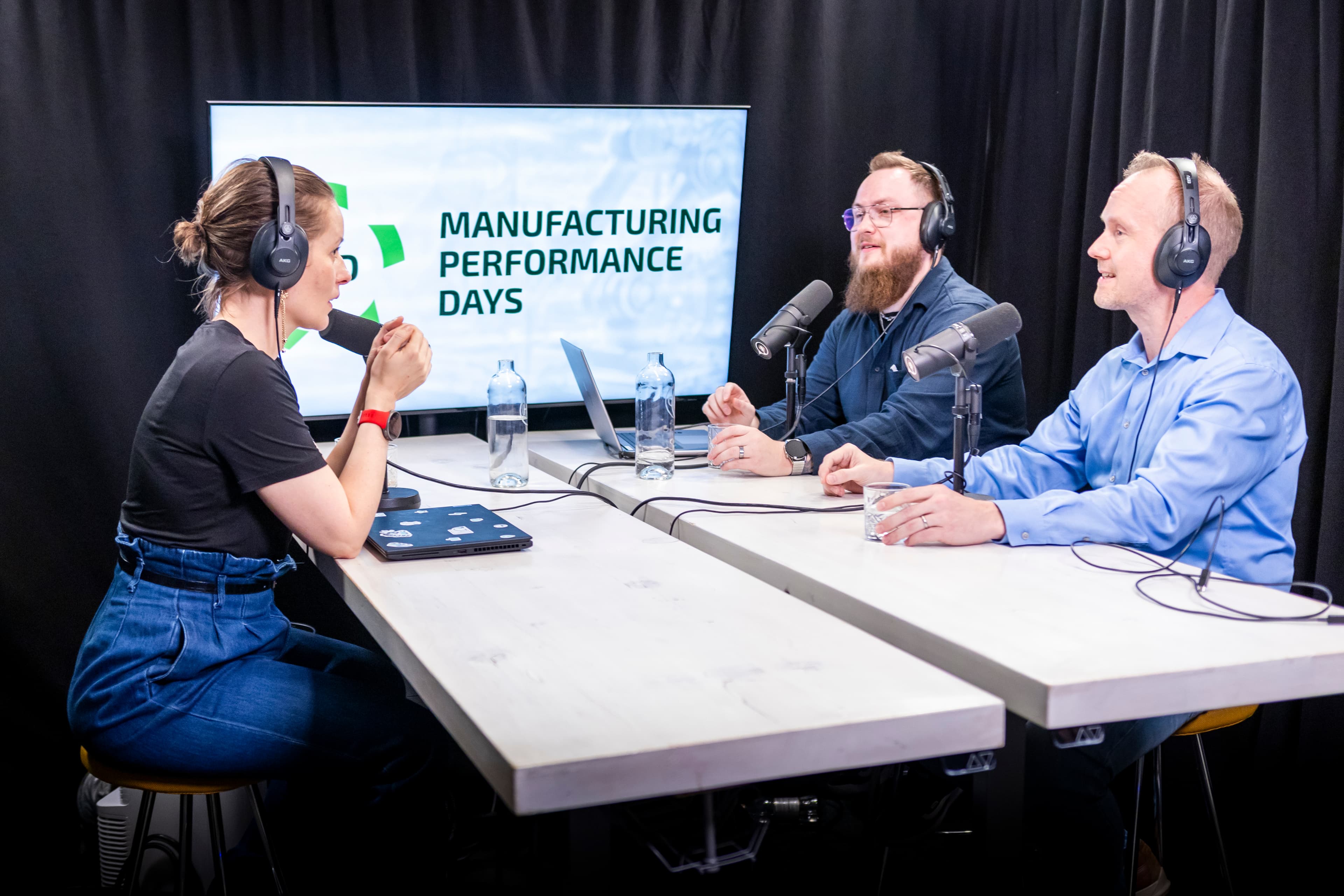
Artificial intelligence is transforming manufacturing by connecting systems, securing data, and improving the way people and machines work together. But how do we ensure that AI is truly empowering – not overwhelming – the human workforce?
In this episode of the MPD Q, A & I podcast, Samppa Lahtinen, Senior Manager of Industry Solutions at M-Files, and Iiro Alhonmäki, IT Service Manager at Valio, explore how AI can enhance productivity, quality, and collaboration in manufacturing when built on three essential foundations: connectivity, confidentiality, and curation.
Lahtinen and Alhonmäki describe how these three C’s form the backbone of practical, people-centric AI adoption in industrial environments.
1. Connectivity – Breaking Down Data Silos
Manufacturing companies operate across multiple platforms and data systems – from documentation and supplier management to maintenance and compliance.
By integrating these systems, AI can help workers find and use information more easily, eliminating repetitive tasks and enabling more informed decisions.
Lahtinen emphasizes that AI should augment, not replace, human expertise:
“It’s about empowering people with digital assistants that bring a tenfold boost – helping them work smarter, focus on innovation, and make a real impact every day.”
For Valio, connectivity means ensuring that everyone, from factory floor to IT, has access to consistent, real-time information, which improves quality and operational safety.
“We should design AI as a partner. In the food industry, there’s a lot of responsibility and regulation – we can’t put that on a machine alone,” says Iiro Alhonmäki.
2. Confidentiality – Building Trust in Data
Data security and access control are essential for trustworthy AI. Both guests stress that even the smartest algorithms are only as reliable as the data and permissions behind them.
Lahtinen points out that AI must be designed with confidentiality and responsibility in mind:
“You always need to make sure that people have access only to the right information – not more, not less.”
This mindset ensures that AI supports safe operations and complies with strict manufacturing standards.
3. Curation – Turning Data into Insight
Lahtinen reinforces the point that trust depends on solid technical foundations:
“You have to have the data right – the permissions, the structures, everything built correctly. Then you can do better things on top.”
Curation – selecting, organizing, and maintaining quality data – ensures that AI produces meaningful results rather than noise.
For Valio, curated data supports predictive maintenance, anomaly detection, and smarter quality management:
“I’d like to see more use of machine learning for anomaly detection and prediction – that’s where many companies could really benefit,” says Alhonmäki.
Both Lahtinen and Alhonmäki agree that AI’s real impact comes from solving genuine problems, not chasing the latest trend.
“The best results come when you start from the problem, not the technology. AI works best when it’s built to support real human needs,” says Lahtinen.
They encourage companies to start small, with clear use cases that deliver tangible benefits, and to view AI as a long-term tool for empowerment.
“When the AI hype started, everyone asked, ‘What can AI do for us?’ But the real business cases come from asking, ‘What is our problem, and could AI help solve it?’,” says Alhonmäki.
The conversation highlights an emerging truth: AI’s success in manufacturing depends as much on people as on technology.
Training, collaboration, and continuous learning are essential to close the gap between AI experts and operational teams.
“We need to bring AI closer to everyday work, not just to developers or IT, but to everyone who can benefit from it,” says Alhonmäki.
Connectivity, confidentiality, and curation are more than technical principles – they are the foundation of a human-centered digital transformation.
When implemented with purpose, AI enhances creativity, safety, and productivity – making manufacturing not only smarter, but more meaningful.
The MPD Q, A & I podcast series, part of Manufacturing Performance Days, dives deep into the role of AI in creating new digital business models, advancing industrial technologies, and driving sustainable transformation. Through candid conversations with leading professionals, the series offers first-hand insights into the future of AI-powered manufacturing
🎧 Listen to the episode:
Spotify:
https://open.spotify.com/episode/2zJWQaZpSdVyAxUa6vyZND?si=5d21a4b691e8472b
Apple Podcasts: